Introduction
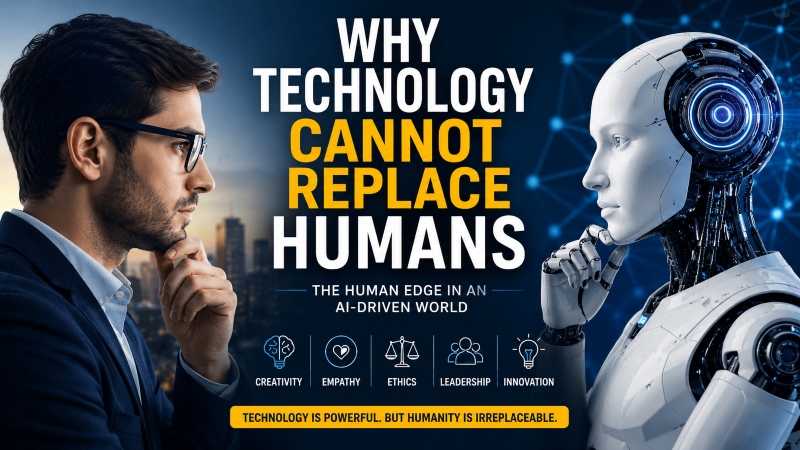
Technology has transformed the modern world in ways that were once unimaginable. Artificial intelligence, automation, robotics, and machine learning are changing industries, improving efficiency, and helping businesses achieve more with fewer resources. From customer service chatbots to self-driving vehicles, technology is becoming an essential part of daily life. However, despite these remarkable advancements, technology cannot completely replace humans. Machines can process data, automate repetitive tasks, and perform calculations faster than any person. Yet they still lack the emotional intelligence, creativity, moral judgment, and human connection that define humanity. This article explores why technology cannot replace humans and why people will continue to play a vital role in society, business, education, healthcare, and innovation.
Understanding the Role of Technology
Technology is designed to make life easier. It helps individuals and organizations save time, increase productivity, and solve complex problems. Businesses use technology to streamline operations, while consumers rely on digital tools for communication, shopping, entertainment, and learning. Despite its usefulness, technology is ultimately a tool created by humans. It works according to programmed instructions, algorithms, and data inputs. It cannot independently develop true human understanding or consciousness. The purpose of technology should be to support humans, not replace them entirely.
Human Creativity Cannot Be Replicated
One of the strongest reasons technology cannot replace humans is creativity. Humans have the ability to imagine new possibilities, create original ideas, and think beyond existing patterns. Artists, writers, musicians, designers, and entrepreneurs often develop groundbreaking concepts through inspiration and personal experiences. Artificial intelligence can generate content based on existing information, but it does not truly create in the same way humans do. AI learns from patterns in data and produces outputs based on those patterns. Human creativity, on the other hand, comes from emotions, experiences, culture, and imagination. Many of the world’s greatest inventions, artistic masterpieces, and scientific discoveries were driven by human curiosity and creative thinking rather than automated systems.
Emotional Intelligence Is a Human Strength
Technology cannot genuinely understand emotions. Humans possess emotional intelligence, which allows them to recognize feelings, build relationships, show empathy, and communicate effectively. These skills are essential in personal and professional environments.
Consider professions such as:
- Teachers
- Therapists
- Social workers
- Nurses
- Counselors
- Customer service professionals
While AI can simulate conversations, it cannot truly feel compassion or understand human emotions on a personal level. People often seek understanding, encouragement, and emotional support from other humans. A machine can provide information, but it cannot replace genuine human connection.
Human Judgment Goes Beyond Data
Technology relies heavily on data and algorithms. Humans, however, use judgment, ethics, values, and life experiences when making decisions. Many situations involve complex moral questions that cannot be solved through data alone.
For example:
- Medical treatment decisions
- Legal judgments
- Leadership challenges
- Social issues
- Ethical dilemmas
Humans consider cultural values, personal circumstances, and ethical consequences before making decisions. Technology lacks this deeper understanding. This is why human oversight remains necessary even when advanced technology is involved.
Technology vs Humans: Key Differences
| Aspect | Humans | Technology |
|---|---|---|
| Creativity | Original and imaginative | Based on existing data |
| Emotions | Can feel and understand emotions | Cannot genuinely feel emotions |
| Ethics | Uses moral judgment | Follows programmed rules |
| Adaptability | Can handle unexpected situations | Limited by programming |
| Relationships | Builds trust and connections | Simulates interaction |
| Innovation | Creates new concepts | Processes existing information |
| Responsibility | Accountable for decisions | Depends on human guidance |
This comparison clearly shows that technology and humans have different strengths. Rather than replacing people, technology works best when supporting human abilities.
Human Adaptability Remains Essential
The world is constantly changing. New challenges emerge every day, requiring flexibility and adaptability. Humans can quickly adjust to unfamiliar situations, learn from experiences, and find innovative solutions. This ability is especially important during crises, emergencies, and unexpected events. Technology performs well when operating within predefined conditions. However, when situations become unpredictable, human judgment becomes essential. For example, during natural disasters, healthcare emergencies, or economic disruptions, people often rely on human leaders, experts, and communities rather than automated systems alone.
Innovation Starts with Human Thinking
Every major technological advancement began with a human idea. Computers, smartphones, artificial intelligence, robotics, and the internet were all created by people. Technology itself is a product of human innovation. Even the most advanced AI systems require human developers, researchers, engineers, and designers. Without human intelligence, technology would not exist. Innovation depends on asking questions, exploring possibilities, and challenging existing limitations. These are uniquely human characteristics that continue to drive progress. As technology evolves, human innovation will remain the force behind future discoveries.
Human Relationships Cannot Be Automated
Relationships are built on trust, empathy, communication, and shared experiences. Technology can facilitate communication through social media, messaging apps, and video calls. However, it cannot replace meaningful human interaction. Families, friendships, communities, and workplaces depend on emotional connections that machines cannot genuinely provide. People naturally seek belonging and understanding. While virtual assistants and chatbots can answer questions, they cannot form authentic relationships. Human connection remains one of the most important aspects of life and cannot be automated.
The Importance of Human Leadership
Leadership involves much more than making decisions. Effective leaders inspire people, build trust, manage conflicts, and motivate teams toward shared goals. These responsibilities require emotional intelligence, communication skills, and strategic thinking. Technology can provide valuable data and recommendations, but leadership requires understanding human behavior and organizational culture. Successful organizations combine technological tools with strong human leadership to achieve the best results. As workplaces become more digital, the need for capable human leaders will continue to grow.
Technology Has Limitations
Although technology offers many benefits, it also has limitations.
Some common limitations include:
Lack of Common Sense
Humans naturally understand context and everyday situations. Technology often struggles when faced with scenarios outside its training data.
Dependence on Data
Artificial intelligence requires large amounts of data to function effectively. Poor-quality data can lead to inaccurate results.
No True Self-Awareness
Machines do not possess consciousness or self-awareness. They cannot think independently in the same way humans do.
Security Risks
Technology can be vulnerable to cyberattacks, system failures, and technical errors. Human supervision is necessary to reduce these risks. These limitations highlight why technology should complement human capabilities rather than replace them.
The Future: Humans and Technology Working Together
The future is not about humans versus technology. Instead, it is about collaboration. Technology can handle repetitive tasks, analyze large datasets, and improve efficiency. Humans can focus on creativity, leadership, emotional intelligence, and innovation. This partnership creates opportunities for greater productivity and progress.
Examples include:
- Doctors using AI-assisted diagnostics
- Teachers using digital learning tools
- Businesses using automation for routine tasks
- Researchers using advanced computing systems
When humans and technology work together, both strengths can be utilized effectively.
Conclusion
Technology has become an indispensable part of modern society, and its influence will continue to grow in the coming years. However, despite significant advancements in artificial intelligence and automation, technology cannot replace humans completely. Human creativity, emotional intelligence, ethical judgment, adaptability, leadership, and meaningful relationships remain qualities that machines cannot truly replicate. Technology excels at processing information and improving efficiency, but it still depends on human guidance, innovation, and oversight. The most successful future will not involve replacing people with machines. Instead, it will involve combining the strengths of both humans and technology. By working together, society can achieve greater innovation, productivity, and progress while preserving the unique qualities that make humans irreplaceable.