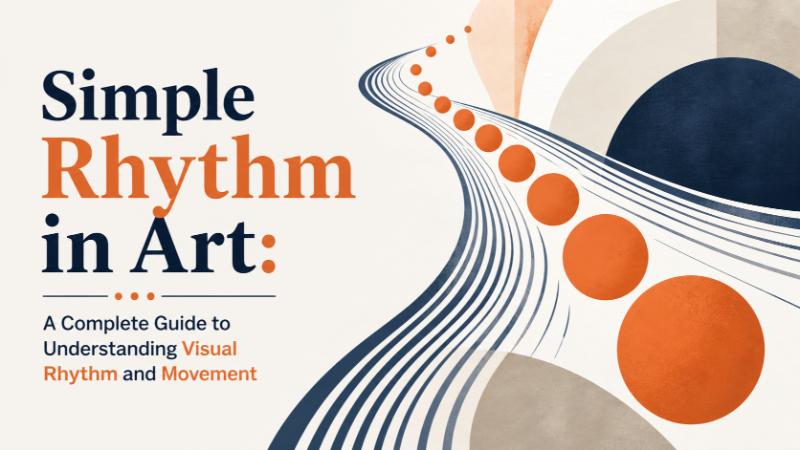
Art is a language that speaks without words. It communicates emotions, ideas, and stories through colors, shapes, lines, and patterns. One of the most powerful and fascinating elements of this visual language is rhythm. Just like music has a beat that makes you tap your feet, art has a rhythm that guides your eyes and stirs your soul. In this article, we will explore the concept of simple rhythm in art — what it is, why it matters, how artists use it, and how you can apply it in your own creative work.
What Is Rhythm in Art?
Rhythm in art refers to the repetition of visual elements — such as shapes, colors, lines, textures, or patterns — that creates a sense of movement, flow, and harmony in an artwork. Just as musical rhythm is created by repeating beats and pauses, visual rhythm is created by repeating and organizing art elements in a way that leads the viewer’s eye across the artwork. When you look at a painting or design and your eyes naturally move from one area to another in a smooth, flowing way, that is rhythm at work. It gives artwork a sense of life, energy, and structure — preventing it from feeling static or chaotic. Rhythm is one of the seven principles of art and design, alongside balance, emphasis, movement, pattern, unity, and variety. It works hand in hand with these other principles to create visually compelling and emotionally powerful artwork.
What Is Simple Rhythm in Art?
Simple rhythm, also known as regular rhythm, is the most basic and straightforward type of visual rhythm. It is created by repeating the same element — the same shape, color, line, or motif — at equal or consistent intervals throughout the artwork. Think of a row of identical windows on a building, a fence with evenly spaced posts, or a fabric pattern with the same flower repeated across it. These are all examples of simple rhythm in everyday life and art. Simple rhythm creates a sense of order, predictability, and calm.
Why Is Rhythm Important in Art?
Rhythm plays a crucial role in making artwork successful and engaging. Here is why rhythm matters in art:
It Creates Unity and Harmony — By repeating elements throughout the artwork, rhythm ties the composition together and creates a sense of wholeness and coherence.
It Sets the Mood and Tone — Different types of rhythm create different emotional effects. Simple, regular rhythm feels calm and orderly, while complex or alternating rhythm feels exciting and energetic.
It Helps Organize Visual Information — Rhythm helps artists organize their compositions in a way that is clear and easy for viewers to understand and appreciate.
Types of Rhythm in Art
While this article focuses on simple rhythm, it is helpful to understand all the main types of rhythm in art to see how they differ:
| Type of Rhythm | Description | Visual Effect | Common Use |
|---|---|---|---|
| Simple / Regular Rhythm | Same element repeated at equal intervals | Calm, orderly, predictable | Patterns, textiles, architecture |
| Alternating Rhythm | Two or more elements repeated in a sequence | Dynamic, energetic, lively | Border designs, tile patterns |
| Progressive Rhythm | Elements repeated with gradual change in size or color | Movement, growth, depth | Perspective drawings, gradients |
| Flowing Rhythm | Curved, organic repetition of elements | Gentle, natural, soothing | Nature paintings, water, waves |
| Random Rhythm | Elements repeated without a set pattern | Chaotic, spontaneous, free | Abstract art, expressionism |
How Artists Create Simple Rhythm
Artists use several techniques to create simple rhythm in their work:
1. Repetition of Shapes The most common way to create simple rhythm is by repeating the same shape throughout the composition. For example, a series of identical circles, triangles, or squares placed at regular intervals creates a clear and satisfying visual rhythm.
2. Repetition of Colors Repeating the same color across different parts of an artwork creates a visual connection between those areas and establishes rhythm. For example, using the same shade of blue in the sky, a vase, and a piece of clothing in a painting ties the composition together rhythmically.
3. Repetition of Lines Parallel lines, repeated curves, or evenly spaced diagonal lines all create strong visual rhythm. Think of the horizontal lines in a calm seascape or the vertical lines of a row of trees — both create a soothing, regular rhythm.
4. Repetition of Textures Using the same texture repeatedly across a surface creates tactile rhythm. This is commonly seen in sculpture, pottery, and textile art, where repeated textures give the work a unified and harmonious feel.
5. Repetition of Patterns or Motifs A motif is a single design element — like a leaf, a star, or a geometric shape — that is repeated to create a pattern. Simple rhythm is often built around the repetition of a single motif at regular intervals, as seen in wallpaper, fabric prints, and tile designs.
Famous Examples of Simple Rhythm in Art
Simple rhythm appears throughout art history in many famous works and styles:
Ancient Greek Pottery — Greek pottery is famous for its use of simple rhythm. Repeated geometric shapes, such as triangles, meanders (zigzag patterns), and rows of figures, are arranged in neat horizontal bands around the vessel, creating a clear and elegant visual rhythm.
Islamic Geometric Art — Islamic art is renowned for its intricate geometric patterns, many of which are built on simple rhythm.
Andy Warhol’s Pop Art — Andy Warhol famously used simple rhythm in works like his Marilyn Monroe and Campbell’s Soup Cans series. By repeating the same image in a grid pattern — sometimes with slight color variations — Warhol created a powerful visual rhythm that also made a bold cultural statement.
African Kente Cloth — The traditional Kente cloth of Ghana is a stunning example of simple rhythm in textile art. Brightly colored geometric shapes are woven in repeating patterns, creating a vibrant and joyful visual rhythm that carries deep cultural meaning.
Architecture — Many famous buildings use simple rhythm in their design. The columns of the Greek Parthenon, the arches of Roman aqueducts, and the windows of Gothic cathedrals all create powerful architectural rhythm through the regular repetition of structural elements.
Simple Rhythm in Art for Beginners
If you are a beginner artist or art student, working with simple rhythm is a wonderful way to start understanding composition and design. Here are some beginner-friendly exercises to explore simple rhythm in your own artwork:
Exercise 1 — Stamp Pattern — Cut a simple shape from a sponge or potato and dip it in paint. Stamp it repeatedly across a paper at equal intervals to create a simple repeating pattern. Experiment with colors and spacing.
Exercise 2 — Line Drawing — Draw a series of parallel lines across your paper — horizontal, vertical, or diagonal. Pay attention to the spacing and notice how even spacing creates calm rhythm while uneven spacing creates tension.
Exercise 3 — Geometric Pattern — Choose one simple geometric shape and repeat it across your paper in a regular grid. Then experiment with color to add visual interest while maintaining the underlying rhythm.
Exercise 4 — Nature Observation — Go outside and look for examples of rhythm in nature — rows of leaves on a branch, petals on a flower, waves on water, or bricks on a wall.
Simple Rhythm vs. Pattern: What Is the Difference?
Many people confuse rhythm and pattern in art. While they are closely related, there is an important difference:
Pattern is the actual repeated arrangement of elements — it is the visual result you see on the surface.
Rhythm is the sense of movement and flow that the pattern creates — it is the visual experience the viewer feels when looking at the pattern.
In other words, pattern is what you create, and rhythm is what the viewer experiences.
Final Thoughts
Simple rhythm in art is one of the most fundamental and beautiful principles of visual design. It is the heartbeat of a composition — steady, consistent, and deeply satisfying. From the ancient pottery of Greece to the bold pop art of Andy Warhol, from Islamic geometric tiles to African Kente cloth, simple rhythm has been a cornerstone of artistic expression across cultures and centuries. Whether you are an experienced artist or just beginning your creative journey, understanding and applying simple rhythm will transform the way you see and create art.
FAQs About Simple Rhythm in Art
Q1: What is simple rhythm in art?
Simple rhythm in art is the repetition of the same visual element — such as a shape, color, line, or texture — at regular and consistent intervals throughout an artwork. It creates a sense of order, calm, and visual flow.
Q2: What is the difference between rhythm and pattern in art?
Pattern is the repeated arrangement of visual elements on the surface. Rhythm is the sense of movement and flow that the pattern creates for the viewer. Pattern is what you create; rhythm is what the viewer experiences.
Q3: Why is rhythm important in art?
Rhythm is important because it creates visual movement, brings life and energy to artwork, unifies the composition, sets the emotional tone, and guides the viewer’s eye across the artwork in a natural and engaging way.
Q4: What are the types of rhythm in art?
The main types of rhythm in art are simple (regular) rhythm, alternating rhythm, progressive rhythm, flowing rhythm, and random rhythm. Each type creates a different visual effect and emotional mood.
Q5: How do artists create rhythm in their work?
Artists create rhythm by repeating visual elements such as shapes, colors, lines, textures, and patterns throughout their composition.