Introduction
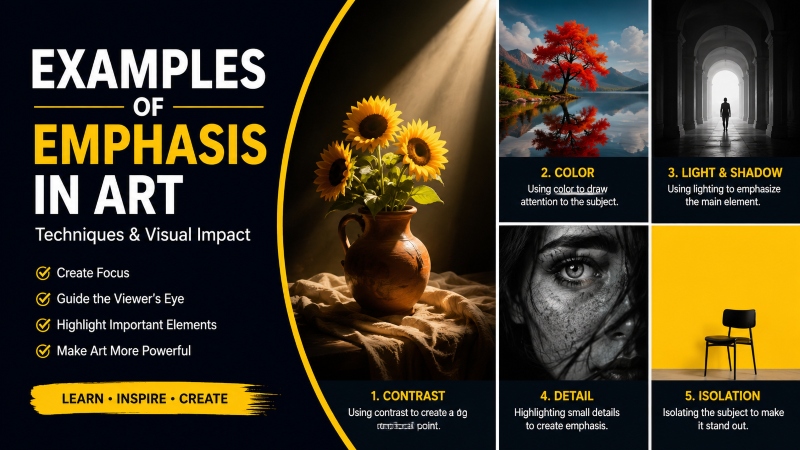
Art is more than colors, shapes, and lines. Every great artwork tells a story and guides the viewer’s attention toward a specific subject or idea. One of the most important principles that artists use to achieve this effect is emphasis. Emphasis in art helps highlight the most important part of an artwork and creates a strong visual impact. Without emphasis, an artwork may appear confusing or lack direction. Artists use different techniques such as color contrast, size, texture, lighting, and placement to create emphasis.
Whether in paintings, digital art, photography, sculpture, or graphic design, emphasis helps viewers understand where to focus first. In this article, we will explore the meaning of emphasis in art, why it is important, and several powerful examples of emphasis in different art forms. You will also learn about common techniques artists use to create emphasis and how you can apply them in your own creative work.
What Is Emphasis in Art?
Emphasis in art is a principle of design that makes a certain part of an artwork stand out more than other areas. It draws the viewer’s attention to a focal point. The focal point is usually the most important subject or message in the artwork.
Artists create emphasis to:
- Direct the viewer’s attention
- Highlight important details
- Create visual interest
- Improve storytelling
- Add emotional impact
- Organize the composition
For example, in a portrait painting, the artist may emphasize the face using brighter colors or stronger lighting. In a landscape painting, a large tree or mountain may become the focal point through contrast or positioning.
Why Is Emphasis Important in Art?
Emphasis is important because it gives structure and meaning to artwork. Without emphasis, viewers may not know where to look first. A clear focal point helps make the composition more engaging and visually balanced.
Benefits of Emphasis in Art
| Benefit | Description |
|---|---|
| Creates Focus | Guides viewers toward the most important part of the artwork |
| Improves Storytelling | Helps communicate the artist’s message clearly |
| Adds Visual Interest | Makes artwork more dynamic and attractive |
| Creates Emotional Impact | Highlights emotions, actions, or important details |
| Organizes Composition | Prevents artwork from looking cluttered or confusing |
Techniques Used to Create Emphasis in Art
Artists use many creative techniques to produce emphasis. Below are some of the most common methods.
1. Color Contrast
Color contrast is one of the easiest ways to create emphasis. Bright or warm colors naturally attract attention when placed against dull or cool colors. For example, a red flower in a field of green grass immediately becomes the focal point. The strong contrast between red and green catches the viewer’s eye.
2. Size and Scale
Larger objects often appear more important than smaller ones. Artists use size to emphasize subjects within a composition. For instance, in many historical paintings, kings or leaders are painted larger than surrounding people to show power and importance.
3. Placement and Position
Objects placed in the center or foreground usually gain more attention. Strategic placement helps artists guide the viewer’s eyes. A subject positioned alone in the middle of the canvas often becomes the main focus.
4. Lighting and Value
Light areas attract attention more than dark areas. Artists use highlights and shadows to create emphasis. A spotlight effect in paintings or photography can strongly emphasize a subject.
5. Texture and Detail
Detailed areas naturally attract viewers more than simple areas. Artists often add more texture or intricate details to the focal point. For example, a highly detailed face in a portrait will stand out against a soft background.
6. Isolation
When an object is separated from other elements, it becomes more noticeable. Isolation creates emphasis through simplicity. A single tree in an empty landscape is a strong example of isolation.
Examples of Emphasis in Art
There are countless examples of emphasis in art history and modern design. Let’s explore some famous and practical examples.
1. Leonardo da Vinci’s Mona Lisa
The Mona Lisa is one of the most famous paintings in the world. Leonardo da Vinci created emphasis by drawing attention to Mona Lisa’s face.
How Emphasis Is Created
- Soft lighting highlights the face and hands
- Dark background increases contrast
- Facial expression attracts attention
- The composition naturally leads the eye toward the subject
The viewer immediately focuses on Mona Lisa’s mysterious smile because of the careful use of emphasis.
2. Vincent van Gogh’s The Starry Night
In The Starry Night, Vincent van Gogh uses swirling lines, bright colors, and movement to emphasize the night sky.
Techniques Used
- Bright yellow stars contrast with the dark blue sky
- Dynamic brushstrokes create movement
- The large cypress tree adds visual balance
The glowing stars become the focal point because they stand out strongly against the surrounding darkness.
3. Edvard Munch’s The Scream
The Scream is famous for its emotional intensity. The central figure is emphasized through color, shape, and composition.
Emphasis Techniques
- Distorted figure draws immediate attention
- Strong facial expression creates emotional focus
- Background lines direct the eye toward the figure
- Bright colors increase visual impact
The viewer instantly notices the screaming figure because it dominates the composition.
4. Emphasis in Photography
Photography also uses emphasis to guide viewers.
Example
A photographer may blur the background while keeping the main subject sharp. This technique is called shallow depth of field.
How It Works
- Sharp focus highlights the subject
- Blurred surroundings reduce distractions
- Lighting and framing strengthen attention
Portrait photographers commonly use this method to emphasize faces.
5. Emphasis in Digital Art and Graphic Design
Modern digital artists and designers use emphasis to improve communication and branding.
Common Examples
- Bright buttons on websites
- Large headlines in advertisements
- Bold typography in posters
- Contrasting colors in logos
For example, a red “Buy Now” button on a white webpage immediately attracts attention.
6. Emphasis in Sculpture
Sculptors use scale, texture, and positioning to create emphasis.
Example
The Statue of Liberty emphasizes freedom and power through its massive size and elevated position.
Techniques Used
- Large scale creates importance
- Torch placement attracts attention
- Strong posture communicates confidence
The sculpture’s impressive height naturally becomes the focal point.
7. Emphasis in Abstract Art
Abstract artists often use color and shape to create emphasis instead of realistic subjects.
Example
A bright geometric shape placed in the center of a painting may become the focal point.
Techniques Used
- Bold color contrast
- Unique shapes
- Repetition and rhythm
- Empty surrounding space
Abstract emphasis relies heavily on visual design principles.
Common Examples of Emphasis in Art
| Art Form | Example of Emphasis | Technique Used |
|---|---|---|
| Painting | Bright flower in dark background | Color contrast |
| Portrait Art | Face highlighted with light | Lighting and detail |
| Photography | Sharp subject with blurred background | Focus and isolation |
| Graphic Design | Large bold headline | Size and typography |
| Sculpture | Tall statue in open space | Scale and placement |
| Abstract Art | Bright shape in center | Contrast and positioning |
| Digital Art | Glowing object in dark scene | Lighting and color |
| Landscape Art | Lone tree in field | Isolation |
How Beginners Can Use Emphasis in Art
If you are new to art, learning emphasis can improve your compositions significantly. Here are some simple tips.
Choose One Main Focal Point
Avoid making every object equally important. Decide what viewers should notice first.
Use Contrast Carefully
Contrast in color, size, or brightness helps create attention.
Simplify the Background
Too many details can distract viewers. Keep less important areas simple.
Experiment With Composition
Try placing your focal point in different positions to see what works best.
Practice Using Light
Highlights and shadows can make subjects stand out naturally.
Common Mistakes When Creating Emphasis
Many beginner artists struggle with emphasis because they try to emphasize too many things at once.
Mistake 1: Too Many Focal Points
When everything stands out, nothing truly becomes important.
Mistake 2: Lack of Contrast
Without contrast, viewers may not notice the focal point.
Mistake 3: Overcrowded Composition
Too many details can reduce visual clarity.
Mistake 4: Poor Placement
A poorly positioned subject may fail to attract attention. Understanding these mistakes can help artists create stronger and more effective artwork.
Difference Between Emphasis and Contrast
People often confuse emphasis with contrast, but they are not exactly the same.
| Emphasis | Contrast |
|---|---|
| Focuses attention on one area | Shows differences between elements |
| Creates a focal point | Creates visual variety |
| Helps guide the viewer’s eye | Helps separate objects visually |
| Uses techniques like lighting and placement | Uses differences in color, texture, or size |
Contrast is often used as a tool to create emphasis.
Conclusion
Emphasis is one of the most powerful principles of art and design. It helps artists guide viewers toward the most important part of an artwork while improving storytelling, emotional impact, and visual clarity. From famous paintings like Mona Lisa and The Starry Night to modern graphic design and photography, emphasis plays a major role in creating memorable visuals. Artists use techniques such as color contrast, lighting, scale, placement, texture, and isolation to create strong focal points. Understanding emphasis can help beginners and professional artists create more engaging and meaningful artwork. Whether you are painting, drawing, designing, or taking photographs, mastering emphasis will improve your artistic skills and make your work more visually effective. By studying examples of emphasis in art and practicing these techniques, you can learn how to direct attention and communicate ideas more successfully in your own creative projects.