Introduction
Art is not always about perfect patterns and strict rules. Sometimes the most powerful and visually exciting artwork comes from something completely unexpected — random rhythm. When elements are placed freely, without a fixed sequence or predictable order, they create a unique kind of energy that draws the viewer in and keeps the eye moving across the entire composition. Random rhythm in art is one of the most expressive and liberating principles an artist can use. It allows for creative freedom while still maintaining visual interest and harmony. Whether you are a beginner exploring art fundamentals or an experienced artist looking to add energy to your work, understanding random rhythm can completely transform the way you create.
What Is Random Rhythm in Art?
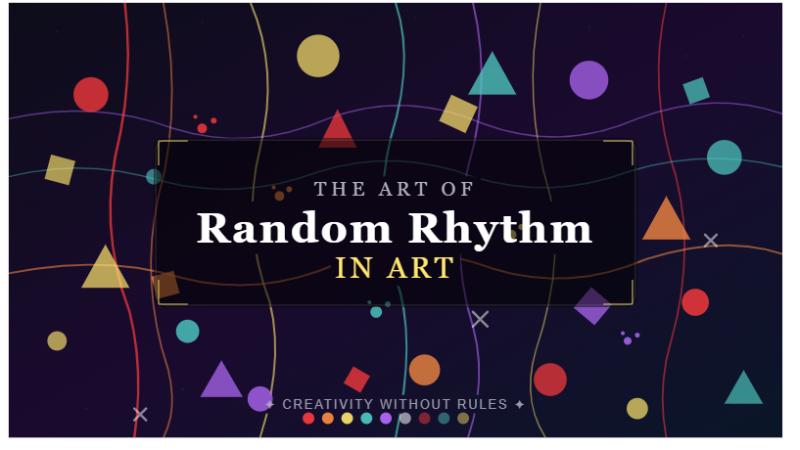
Random rhythm in art refers to the repetition of elements — such as shapes, colors, lines, or textures — in an unplanned, irregular, and unpredictable way. Unlike regular rhythm, where elements repeat at fixed intervals, random rhythm has no set pattern. The elements appear scattered, free, and spontaneous, yet they still create a sense of visual movement and unity across the artwork. Think of leaves falling from a tree, raindrops hitting a window, or stars scattered across a night sky. None of these follow a strict pattern, yet together they create a visually rich and harmonious composition. That is the essence of random rhythm.
Key Characteristics of Random Rhythm
Random rhythm in art has several defining qualities that set it apart from other compositional principles. It involves the repetition of similar elements placed at irregular intervals. There is no predictable sequence or pattern.
Types of Rhythm in Art
To fully understand random rhythm, it helps to see how it compares to other types of rhythm used in visual art. Here is a clear comparison:
| Type of Rhythm | Description | Visual Effect | Example |
|---|---|---|---|
| Regular Rhythm | Elements repeat at equal intervals | Predictable, structured, orderly | Tiles on a floor, brick wall |
| Alternating Rhythm | Two or more elements alternate in sequence | Dynamic but controlled | Black and white checkerboard |
| Progressive Rhythm | Elements gradually change in size or shape | Movement, growth, direction | Spiral staircase, ripples in water |
| Flowing Rhythm | Curved, organic, wave-like repetition | Calm, natural, graceful | Ocean waves, rolling hills |
| Random Rhythm | Elements repeat with no fixed order or spacing | Energetic, spontaneous, free | Scattered leaves, splatter painting |
Each type of rhythm serves a different creative purpose. Random rhythm stands out because it feels the most natural and expressive.
Why Is Random Rhythm Important in Art?
Random rhythm plays a vital role in making artwork feel alive and dynamic. Here is why artists use it so often:
It Creates Visual Energy
When elements are scattered randomly across a canvas, the viewer’s eye has no single path to follow. It jumps from one element to another, creating a sense of movement and excitement. This visual energy keeps the viewer engaged much longer than a static, predictable composition.
It Mimics Nature
Nature itself is full of random rhythm. The arrangement of seeds in a sunflower, the pattern of cracks in dry earth, the distribution of freckles on skin — all of these follow no strict rule yet feel perfectly balanced. Artists who use random rhythm tap into this natural quality, making their work feel organic and authentic.
It Encourages Creative Freedom
Random rhythm liberates the artist from rigid rules. It invites spontaneity, experimentation, and play. Many great artists have used random rhythm as a tool for self-expression and emotional release, producing work that feels raw, honest, and deeply personal.
It Adds Texture and Depth
Repeated elements placed randomly across a surface build up visual texture. This texture adds depth and complexity to a composition, making it richer and more interesting to look at.
Famous Examples of Random Rhythm in Art
Many of the world’s most celebrated artworks use random rhythm as a core compositional principle.
Jackson Pollock is perhaps the most famous example. His drip paintings, created by pouring and splattering paint across large canvases laid on the floor, are a pure expression of random rhythm. Elements — drops, splashes, and lines of paint — repeat across the entire surface in a completely unplanned way, yet the result is visually powerful and hypnotic.
Vincent van Gogh’s brushwork in paintings like The Starry Night also demonstrates random rhythm. Short, curved brushstrokes are scattered across the sky in an irregular pattern, creating a swirling, energetic movement that makes the painting feel alive.
Wassily Kandinsky, one of the founders of abstract art, used random rhythm extensively in his compositions. Shapes, lines, and colors are distributed across his canvases in ways that feel spontaneous yet harmonious.
Even in nature-inspired art, artists like Andy Goldsworthy use found natural objects — leaves, stones, ice — arranged in patterns that reference random rhythm, connecting human creativity with the organic rhythms of the natural world.
How to Use Random Rhythm in Your Own Art
Start with a Single Repeated Element
Choose one simple shape, mark, or color and repeat it across your canvas without planning where each one goes. Let your hand move freely. This is the foundation of random rhythm.
Vary the Size and Orientation
To make your random rhythm feel truly dynamic, vary the size, angle, and spacing of your repeated elements. Some can be large and bold, others small and quiet. This variation adds depth and prevents monotony.
Use Different Media
Random rhythm works beautifully in many different media. Try it with ink splatters, watercolor drops, stamping, collage, or digital brushwork. Each medium creates a different quality of randomness.
Trust the Process
The most important thing about working with random rhythm is to let go of control. Resist the urge to plan or organize. Allow accidents and surprises to happen. Often the most unexpected marks become the most interesting parts of the artwork.
Step Back and Evaluate
After placing your elements randomly, step back and look at the overall composition. Ask yourself whether the eye moves freely across the surface, whether any area feels too heavy or too empty, and whether the overall balance feels right. Make adjustments where needed.
Random Rhythm vs Regular Rhythm: Which Should You Use?
The choice between random and regular rhythm depends entirely on the mood and message you want your artwork to communicate. Use regular rhythm when you want to create a sense of order, calm, and structure — for example in architectural illustration, decorative patterns, or formal compositions. Use random rhythm when you want to express energy, emotion, spontaneity, or the beauty of natural disorder — for example in abstract expressionism, landscape art, or experimental mixed media work. Many skilled artists combine both types within a single artwork, using regular rhythm in some areas to create stability and random rhythm in others to inject energy and surprise.
Conclusion
Random rhythm in art is one of the most exciting and expressive tools available to any artist. It breaks free from rigid structure, invites spontaneity, and creates the kind of visual energy that makes artwork feel truly alive. From Jackson Pollock’s legendary drip paintings to the scattered brushstrokes of Van Gogh, random rhythm has been at the heart of some of art history’s most powerful and enduring works. Whether you are creating abstract paintings, mixed media collages, digital illustrations, or simple sketches, incorporating random rhythm into your practice can open up a whole new world of creative possibility. Embrace the freedom, trust the process, and let your art breathe.
FAQs: About Random Rhythm in Art
Q1: What is random rhythm in art in simple words?
A: Random rhythm in art means repeating elements like shapes, colors, or lines in an irregular, unplanned way across a composition. There is no fixed pattern, but the repetition still creates visual movement and energy.
Q2: What is the difference between random rhythm and regular rhythm in art?
A: Regular rhythm repeats elements at equal, predictable intervals — like a pattern on wallpaper. Random rhythm repeats elements without any fixed order or spacing — like leaves scattered on the ground. Regular rhythm feels structured; random rhythm feels free and organic.
Q3: Which famous artist is best known for using random rhythm?
A: Jackson Pollock is the most famous artist associated with random rhythm. His drip and splatter paintings are iconic examples of how random placement of marks can create visually powerful and emotionally expressive artwork.
Q4: Can random rhythm create balance in a painting?
A: Yes, absolutely. Even though random rhythm has no fixed pattern, when similar elements are distributed across the entire surface of a composition, they create an overall visual balance. The eye moves freely but evenly across the artwork, which produces a sense of harmony.
Q5: How is random rhythm different from chaos in art?
A: Random rhythm involves the repetition of similar elements placed freely — there is still a unifying thread running through the composition. Chaos in art, on the other hand, involves completely unrelated elements with no sense of connection or visual unity. Random rhythm feels intentionally free; chaos feels completely without purpose.
Q6: Where can I see random rhythm in everyday life?
A: Random rhythm is everywhere in nature — in the pattern of stars in the sky, the arrangement of pebbles on a beach, the distribution of spots on a leopard, or the texture of a tree’s bark. Once you start looking for it, you will notice random rhythm all around you.