Unity and Variety in Art Examples
Art becomes beautiful when different elements work together in a balanced way. Two important principles that help artists create attractive artwork are unity and variety. These principles are used in paintings, graphic design, photography, sculpture, and digital art. Unity helps all parts of an artwork feel connected, while variety adds interest and prevents the design from looking boring. When both principles are used correctly, the artwork looks balanced and professional. In this article, you will learn the meaning of unity and variety in art, their importance, and simple examples that make these concepts easy to understand.
What Is Unity in Art?
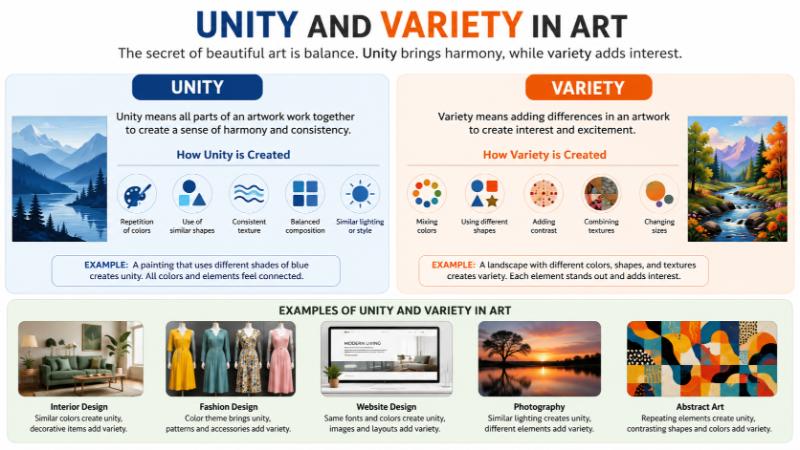
Unity in art means all elements in the artwork work together in harmony. Colors, shapes, lines, and textures combine to create one complete design. Artists use unity to make artwork look organized and visually pleasing. Without unity, an artwork may look confusing or disconnected.
Common Ways to Create Unity
- Repeating colors
- Using similar shapes
- Consistent texture
- Balanced composition
- Similar lighting or style
For example, a painting that uses different shades of blue across the canvas creates a unified appearance.
What Is Variety in Art?
Variety in art means adding differences to make the artwork more interesting. Artists use different colors, shapes, sizes, and textures to capture attention. Variety prevents artwork from looking dull or repetitive.
Common Ways to Create Variety
- Mixing colors
- Using different shapes
- Adding contrast
- Combining textures
- Changing object sizes
For example, a landscape painting with mountains, trees, rivers, and clouds shows variety because different elements are included.
Difference Between Unity and Variety
| Unity | Variety |
|---|---|
| Creates harmony | Creates interest |
| Makes artwork feel connected | Makes artwork feel dynamic |
| Uses repetition | Uses contrast and differences |
| Gives balance | Prevents boredom |
| Focuses on consistency | Focuses on diversity |
Both principles are important because they work together to improve the overall design.
Why Unity and Variety Are Important in Art
Unity and variety help artists create artwork that is both attractive and meaningful.
Benefits of Unity
- Makes artwork organized
- Improves visual flow
- Creates harmony
- Helps viewers understand the design
Benefits of Variety
- Adds excitement
- Increases creativity
- Keeps attention longer
- Makes artwork unique
When artists balance both principles, the artwork becomes more powerful and visually appealing.
Simple Unity and Variety in Art Examples
Here are some easy examples to understand these principles better.
1. Nature Painting
A forest painting may use green tones throughout the artwork to create unity. At the same time, different trees, flowers, and animals create variety.
2. Interior Design
A living room with matching furniture colors shows unity. Decorative pillows, plants, and artwork add variety.
3. Fashion Design
A fashion designer may use one color theme for unity while adding different patterns and accessories for variety.
4. Website Design
Modern websites often use the same font and color palette for unity. Different images, icons, and layouts create variety.
5. Photography
In photography, similar lighting creates unity while different poses and backgrounds add variety.
Elements That Help Create Unity and Variety
| Art Element | Creates Unity | Creates Variety |
|---|---|---|
| Color | Repeated color palette | Contrasting colors |
| Shape | Similar shapes | Mixed shapes |
| Texture | Consistent texture | Different surfaces |
| Line | Repeated line style | Various line directions |
| Space | Balanced spacing | Different object placement |
Artists combine these elements carefully to achieve the best results.
How Artists Balance Unity and Variety
Too much unity can make artwork boring, while too much variety can make it messy. Successful artists maintain balance between both principles.
Tips to Balance Unity and Variety
- Repeat key colors or shapes
- Add small contrasting details
- Use a clear focal point
- Keep the design organized
- Avoid adding too many random elements
Balanced artwork feels creative without looking chaotic.
Famous Examples of Unity and Variety in Art
Many famous artists use these principles in their work.
Vincent van Gogh
Vincent van Gogh used repeated brush strokes for unity while bright color contrasts added variety.
Pablo Picasso
Pablo Picasso combined geometric shapes and bold colors to create strong visual variety while maintaining unity in composition.
Leonardo da Vinci
Leonardo da Vinci created unity through balanced arrangements and variety through realistic details.
These artists show how both principles improve artistic quality.
Common Mistakes Artists Should Avoid
Many beginners struggle to balance unity and variety.
Too Much Unity
- Artwork looks repetitive
- Design becomes boring
- Lack of creativity
Too Much Variety
- Artwork looks messy
- No clear focus
- Difficult to understand
Artists should combine harmony and contrast carefully.
How Students Can Practice Unity and Variety
Students can improve their skills with simple exercises.
Easy Practice Ideas
- Draw objects using one color family
- Create collages with mixed textures
- Design posters with repeated patterns
- Paint landscapes with balanced contrast
Regular practice helps artists understand composition better.
Conclusion
Unity and variety are essential principles of art and design. Unity creates harmony, while variety adds excitement and creativity. Together, they help artists produce balanced and visually attractive artwork. From paintings and photography to fashion and web design, these principles are used everywhere. Understanding unity and variety allows beginners and professionals to create stronger and more meaningful art. By practicing these concepts regularly, artists can improve their creativity and produce artwork that captures attention and communicates ideas effectively.