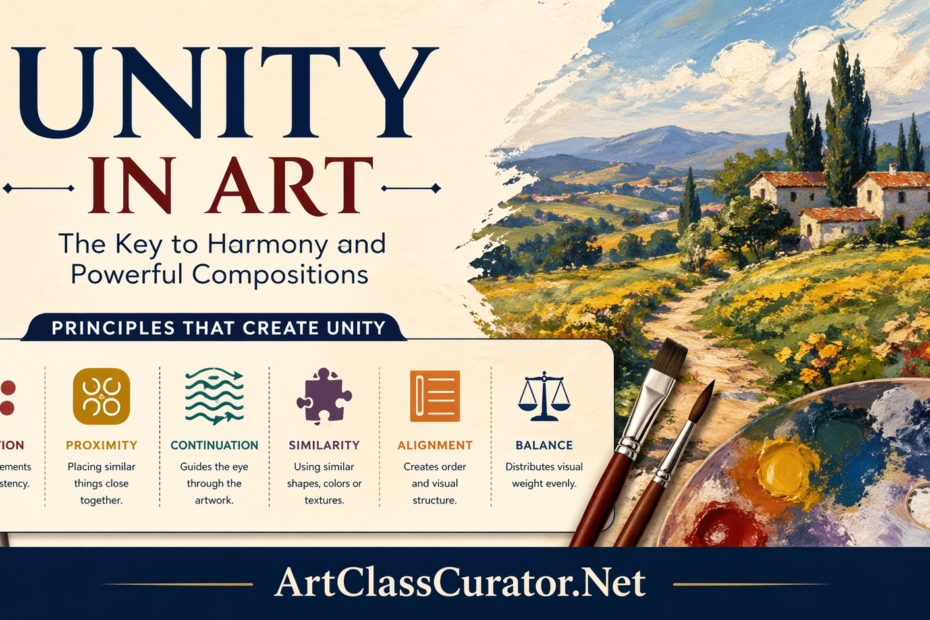
Introduction
Art is not only about beautiful colors, impressive drawings, or realistic paintings. The true power of art lies in how all the visual elements work together to create one complete and meaningful experience. This is where the principle of unity in art becomes extremely important. When we look at a painting, sculpture, design, or photograph and feel that everything looks connected and balanced, that feeling is usually created by unity. Unity helps an artwork feel whole rather than broken into unrelated parts. Without unity, even a technically strong artwork can appear confusing, messy, or unfinished. With unity, even a simple composition can feel powerful, professional, and emotionally effective.
Unity is considered one of the most important principles of design because it controls how the viewer experiences the entire composition. It connects colors, shapes, lines, textures, forms, and ideas into one harmonious visual message. Whether you are an art student, teacher, designer, painter, photographer, or someone preparing for exams like art appreciation, understanding unity is essential for both creating and analyzing artwork. This complete guide will explain unity in art in detail, including definitions, importance, methods, examples, professional techniques, comparison tables, and frequently asked questions.
What Is Unity in Art?
Definition of Unity in Art
Unity in art is the principle that makes all the parts of an artwork feel connected, organized, and complete. It creates a sense of harmony where every visual element supports the overall composition instead of competing against it. Unity ensures that the artwork looks like one finished whole rather than many separate unrelated pieces. It gives the viewer a feeling that everything belongs together.
Simple Meaning of Unity
In simple words:
Unity is the glue that holds an artwork together.
It helps create:
- Harmony
- Balance
- Consistency
- Order
- Flow
- Structure
- Emotional connection
- Visual satisfaction
When unity is missing, art feels chaotic. When unity is strong, art feels intentional and professional.
Why Unity Is Important in Art
Unity is important because it helps the artist communicate ideas clearly and helps the viewer understand the artwork easily. It creates a strong relationship between all elements so the message becomes more powerful.
Importance of Unity in Art
Creates Visual Harmony
Unity makes colors, shapes, textures, and lines work together smoothly. Instead of visual conflict, the viewer experiences harmony.
Improves Viewer Understanding
A unified artwork is easier to read and understand. The viewer does not feel lost or confused.
Strengthens Emotional Impact
When all parts support the same mood or message, the emotional power of the artwork becomes stronger.
Makes Art Look Professional
Professional artists carefully control unity. This is one major reason why their work feels polished and complete.
Supports Storytelling
In narrative art, unity helps strengthen the story by ensuring every object supports the main concept.
Creates Lasting Impression
Viewers remember artwork that feels complete and meaningful.
Unity vs Harmony in Art
Many students confuse unity and harmony because both are closely related. However, they are not exactly the same.
Difference Between Unity and Harmony
Unity
Unity refers to the overall completeness of the entire artwork.
It answers the question:
Does everything feel like one complete composition?
Harmony
Harmony refers to how individual parts relate pleasantly with each other.
It answers the question:
Do these parts work well together?
Comparison Table: Unity vs Harmony
| Feature | Unity | Harmony |
|---|---|---|
| Meaning | Overall wholeness of artwork | Pleasant relationship between parts |
| Focus | Entire composition | Individual elements |
| Purpose | Creates completeness | Creates smooth relationships |
| Result | Artwork feels connected | Artwork feels visually pleasant |
| Example | Full painting feels complete | Colors blend beautifully |
Simple Example for Understanding
Think about a music band.
- Harmony = instruments sounding good together
- Unity = the entire performance feeling complete and powerful
This is the easiest way to understand the difference.
How Artists Create Unity in Art
Artists do not create unity by accident. They use specific professional techniques to control composition and visual relationships. Let us study the most important methods.
Repetition
Meaning of Repetition
Repetition means using the same or similar visual elements multiple times throughout the artwork.
This may include:
- Colors
- Shapes
- Lines
- Patterns
- Textures
- Forms
- Symbols
Repetition creates familiarity and consistency.
Example of Repetition
If an artist repeats circular shapes across the canvas, the viewer naturally feels those parts belong together. This strengthens unity.
Proximity
Meaning of Proximity
Proximity means placing related objects close to each other. Objects that are physically close appear connected.
This principle is very important in:
- Painting
- Photography
- Graphic design
- Interior design
Example of Proximity
In a still-life painting, fruit placed together feels unified, while scattered fruit feels disconnected.
Continuation
Meaning of Continuation
Continuation helps guide the viewer’s eye smoothly across the artwork.
Artists use:
- Curved lines
- Leading lines
- Movement direction
- Flowing shapes
This creates visual flow.
Example of Continuation
A road moving into the distance in a landscape painting creates unity by guiding the eye naturally.
Similarity
Meaning of Similarity
Elements with similar characteristics appear related.
These characteristics include:
- Shape
- Size
- Color
- Texture
- Form
- Value
Similarity creates consistency.
Example of Similarity
Using warm colors like red, orange, and yellow across an abstract painting creates strong unity.
Alignment
Meaning of Alignment
Alignment means placing elements in an organized structure. It reduces visual confusion and improves order.
This is especially important in:
- Posters
- Web design
- Typography
- Digital design
Example of Alignment
Text blocks aligned properly in a poster design create professional unity.
Dominance and Variety
Meaning of Balance Between Unity and Variety
Too much unity can make art boring. Too much variety can make art chaotic. Artists balance both.
Professional Rule
Unity without variety = boring
Variety without unity = confusing
The best artwork uses both together.
Table: Techniques Used to Create Unity
| Technique | Purpose | Example |
|---|---|---|
| Repetition | Creates consistency | Repeating circular shapes |
| Proximity | Shows relationship | Grouped objects in still life |
| Continuation | Creates flow | Road leading into distance |
| Similarity | Builds connection | Same color family |
| Alignment | Improves order | Organized poster layout |
| Variety + Dominance | Prevents boredom | Strong focal point |
Elements of Art That Support Unity
Unity is built using the basic elements of art. These are the foundation of all visual composition.
Main Elements That Create Unity
Color
A consistent color palette creates harmony and emotional connection.
Example
Cool blues create calm unity. Warm reds create energetic unity.
Line
Repeated line styles improve rhythm and movement.
Example
Soft curved lines create peaceful unity. Sharp angular lines create tension.
Shape
Repeated geometric or organic shapes improve cohesion.
Example
Squares and rectangles create structure. Circles create softness.
Texture
Related textures make the artwork feel visually connected.
Example
Rough textures across sculpture surfaces create strong unity.
Form
Three-dimensional relationships matter greatly in sculpture and architecture.
Space
Proper use of positive and negative space improves balance.
Value
Controlled use of light and dark creates visual organization.
Table: Elements of Art and Their Role in Unity
| Element | Role in Unity |
|---|---|
| Color | Creates emotional harmony |
| Line | Builds movement and rhythm |
| Shape | Improves visual consistency |
| Texture | Connects surfaces |
| Form | Supports structural balance |
| Space | Organizes composition |
| Value | Controls visual balance |
Famous Examples of Unity in Art
Learning from famous artworks helps students understand unity more clearly.
The Last Supper by Leonardo da Vinci
This masterpiece shows strong unity through:
- Symmetrical composition
- Grouped figures
- Controlled perspective
- Repeated gestures
- Balanced placement of characters
Even though many people appear in the painting, the composition feels like one complete story.
Starry Night by Vincent van Gogh
Unity is created through:
- Repeated swirling lines
- Consistent blue color palette
- Rhythmic brushstrokes
- Continuous movement across the canvas
Everything supports the emotional mood.
Mondrian’s Grid Paintings
Unity is achieved using:
- Repeated rectangles
- Limited primary colors
- Strong alignment
- Minimal composition
This proves that simplicity can create strong unity.
Unity in Different Types of Art
Unity is not limited to painting. It exists in all visual disciplines.
Unity in Painting
Created through:
- Color relationships
- Brushwork consistency
- Composition planning
Unity in Sculpture
Created through:
- Material consistency
- Structural balance
- Form relationships
Unity in Photography
Created through:
- Framing
- Lighting
- Subject arrangement
Unity in Graphic Design
Created through:
- Grid systems
- Typography
- Color palette
- Layout consistency
Unity in Interior Design
Created through:
- Furniture coordination
- Repeated textures
- Color harmony
- Space planning
Common Mistakes That Destroy Unity
Many students unknowingly weaken unity. These mistakes should be avoided.
Mistakes to Avoid
Too Many Random Colors
Using unrelated colors creates confusion.
Poor Composition
Random placement destroys visual structure.
Inconsistent Style
Mixing too many visual languages weakens connection.
No Clear Focal Point
When everything competes equally, the viewer feels lost.
Excessive Variety
Too much experimentation without control creates chaos.
Professional Tips to Improve Unity
These are real strategies used by experienced artists.
Expert Advice
Start with Limited Colors
Fewer colors often create stronger unity.
Use Thumbnail Sketches
Planning composition first saves major mistakes later.
Repeat Intentionally
Repetition should support purpose, not happen randomly.
Step Back Frequently
Viewing from distance helps identify disconnected areas.
Ask One Powerful Question
Does every part belong here?
If the answer is no, revise it. This question improves artwork dramatically.
Conclusion
Unity in art is one of the strongest principles that transforms ordinary artwork into powerful visual communication.
It creates:
- Harmony
- Balance
- Professional quality
- Emotional depth
- Strong storytelling
- Clear viewer experience
Great art is rarely successful by accident. It succeeds because every color, shape, texture, and line works together with purpose. That is the true meaning of unity. Once you understand unity, you begin to see art differently—and more deeply. Visit my site for further detail.
(FAQs)
What is unity in art in simple words?
Unity in art means all parts of the artwork look connected and complete rather than separate and confusing.
What is the difference between unity and variety?
Unity creates connection, while variety adds interest. Good artwork needs both balance and excitement.
How do artists create unity?
Artists create unity using repetition, similarity, alignment, continuation, proximity, and controlled color relationships.
Why is unity important?
Unity improves clarity, beauty, emotional strength, and professionalism in artwork.
Can abstract art have unity?
Yes, abstract art often uses color, rhythm, and repeated forms to create strong unity.
Is harmony the same as unity?
No. Harmony refers to pleasing relationships between parts, while unity refers to the complete overall composition.
What is a famous example of unity in art?
Van Gogh’s Starry Night is a famous example because repeated lines and colors create strong visual unity.